
The Truth Behind the Industry Name

At a Glance
| Question | Short Answer |
|---|---|
| Is a wool pile weatherstrip made from wool? | Usually not. Modern products are typically made from synthetic fibers such as polypropylene (PP), polyethylene (PE), or nylon. |
| Why is it called “wool pile”? | The name is a historical industry term that has remained in use even after synthetic materials replaced natural fibers. |
| Where is it used? | Sliding windows, sliding doors, aluminum window systems, uPVC windows, and many commercial glazing systems. |
| What determines performance? | Engineering specifications such as pile height, backing width, fiber density, fin design, and installation quality. |
| Who should read this guide? | OEM buyers, window and door manufacturers, product engineers, distributors, installers, and anyone selecting replacement weatherstripping. |
Engineering Note
Throughout this article, the term “wool pile weatherstrip” refers to the traditional industry name rather than the actual fiber composition. In modern manufacturing, the vast majority of wool pile weatherstrips contain no natural wool.
Introduction
If you’ve searched for replacement weatherstripping for windows or doors, you’ve almost certainly encountered the term “wool pile weatherstrip.” At first glance, the name seems straightforward—it suggests a sealing strip made from natural wool. Surprisingly, that assumption is almost always incorrect.
Today, most wool pile weatherstrips are manufactured from engineered synthetic fibers such as polypropylene (PP), polyethylene (PE), or nylon. Yet despite this fundamental change in materials, the traditional name has survived and continues to appear in product catalogs, engineering drawings, purchasing documents, and online searches around the world.
This creates understandable confusion. Homeowners often wonder whether wool pile is superior because it supposedly contains natural wool. New engineers question whether wool pile weatherstrips differ from standard pile weatherstrips. Purchasing managers may even request “wool pile” without realizing that the term alone provides almost no engineering specification.
The explanation is less about materials and more about the evolution of industry terminology.
In modern engineering practice, “wool pile weatherstrip” and “pile weatherstrip” generally refer to the same family of brush-style sealing products. The historical name has remained, while the technology behind the product has continued to evolve.
For manufacturers and OEM buyers, understanding this distinction is important because successful weatherstrip selection depends on measurable engineering specifications—not historical terminology. Pile height, backing width, fiber density, fin configuration, and installation method all have a far greater influence on sealing performance than the word “wool.”
This guide explains why the term originated, why it is still widely used, what modern wool pile weatherstrips are actually made from, and what engineers and buyers should evaluate when selecting the right product.
What Does “Wool Pile Weatherstrip” Mean?

A labeled illustration showing the pile fibers, woven backing, optional center fin, and installation within a window frame.
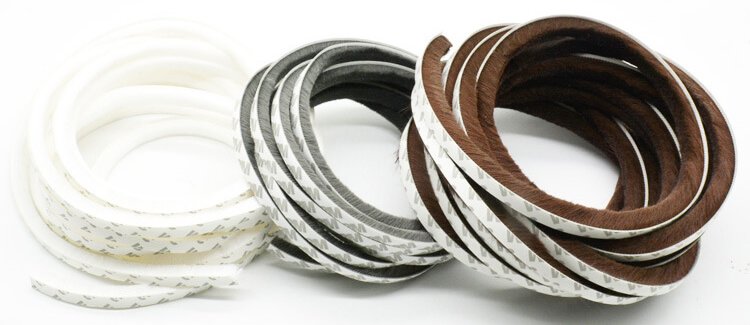
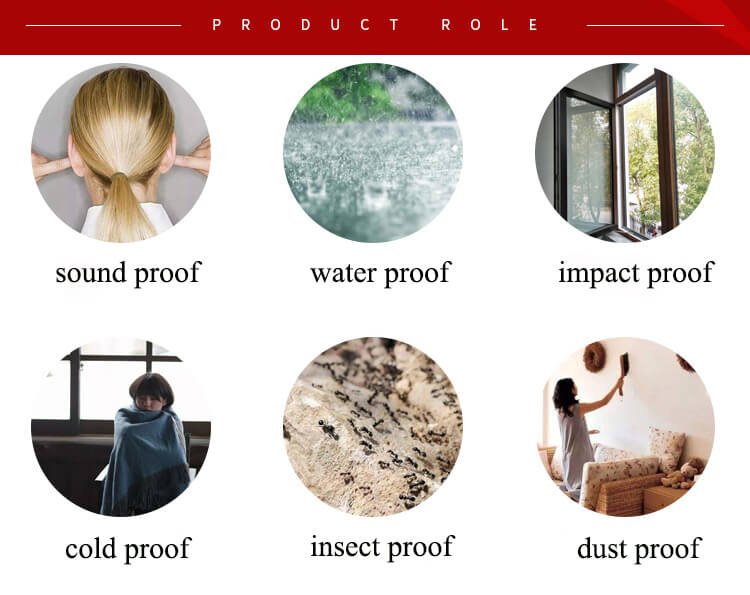
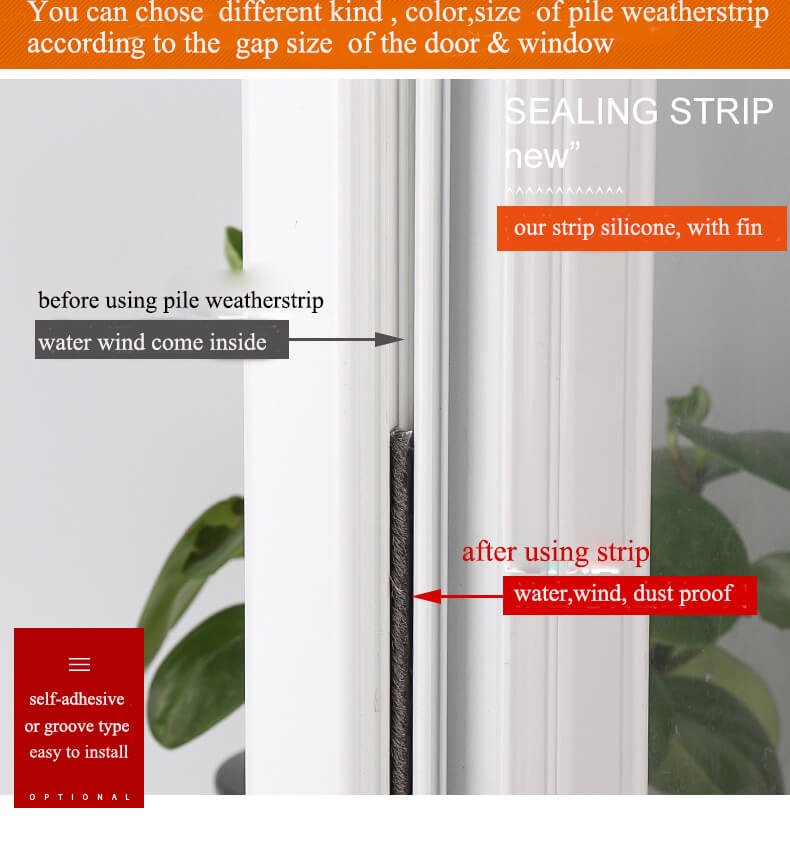
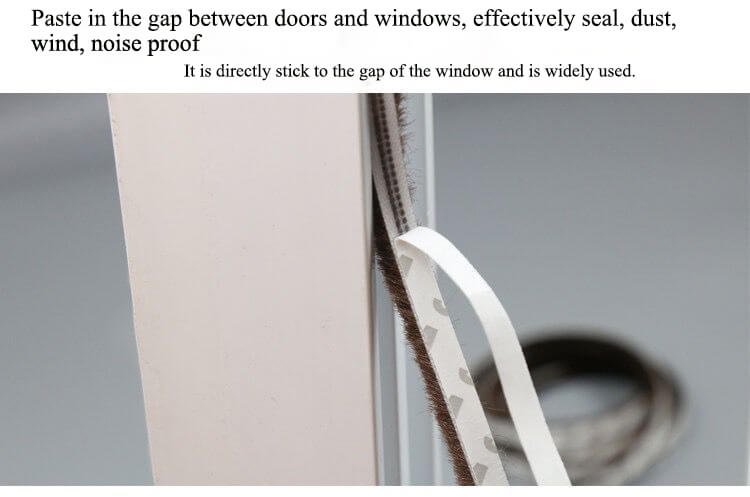
A wool pile weatherstrip is a brush-style sealing strip commonly used to reduce air leakage, dust infiltration, water penetration, insects, and outdoor noise around moving window and door panels. It is one of the most widely used sealing solutions for sliding window and sliding door systems because it provides an effective balance between sealing performance and smooth operation.
Unlike solid rubber seals, a wool pile weatherstrip consists of thousands of fine fibers woven into a narrow backing. When installed, these fibers compress gently against the mating surface as the window or door closes. Rather than relying on heavy compression, the fibers create numerous flexible contact points that interrupt airflow while allowing the sash to slide with relatively low operating resistance.
This brush-style construction offers another important advantage. Because the fibers can adapt to minor dimensional variations, pile weatherstrips accommodate normal manufacturing tolerances, thermal expansion, and slight frame irregularities more effectively than many rigid sealing materials.
Although different regions and manufacturers may use different terminology, several names commonly describe the same general product category:
- Wool pile weatherstrip
- Pile weatherstrip
- Pile seal
- Brush seal
- Brush weatherstrip
The terminology varies, but the engineering principle remains essentially the same.
For OEM manufacturers, however, these commercial names provide very little technical information. Two products may both be described as “wool pile weatherstrips” while differing significantly in:
- Pile height
- Backing width
- Fiber density
- Fiber material
- Center fin configuration
- Installation method
Each of these specifications directly influences sealing performance, durability, operating force, and compatibility with a particular window or door system.
For this reason, experienced engineers rarely specify a product simply as “wool pile.” Instead, they define the complete engineering specifications required for the application.
Why Is It Called “Wool Pile” If It Isn’t Wool?

A timeline illustrating the transition from early wool-like fibers to modern synthetic materials while the traditional industry terminology remained unchanged.
This is perhaps the most frequently misunderstood aspect of the product.
The answer lies in the history of the window and door industry rather than in modern manufacturing.
When brush-style weatherstrips first became widely used decades ago, many early sealing products incorporated natural fibers or fibers that closely resembled wool in both appearance and texture. Their soft, dense construction reminded manufacturers and installers of wool fabrics, and the informal description “wool pile” gradually became accepted throughout the industry.
As material technology advanced during the second half of the twentieth century, manufacturers increasingly adopted engineered polymers that offered better durability, improved moisture resistance, greater dimensional consistency, and more efficient large-scale production.
Polypropylene, polyethylene, and nylon all proved to be better suited to architectural weatherstripping than natural wool.
The materials changed.
The engineering improved.
But the vocabulary remained remarkably consistent.
Today, the term “wool pile” continues to appear in engineering drawings, supplier catalogs, distributor price lists, purchasing documents, and replacement part descriptions, even though modern products are overwhelmingly manufactured from synthetic fibers.
This phenomenon is not unique to the weatherstripping industry. Many industries continue using historical product names long after the original materials or manufacturing methods have disappeared. Over time, the name becomes a convenient description of the product category rather than a literal explanation of its composition.
For engineers and OEM buyers, this distinction is more than an interesting piece of industry history—it has practical consequences.
Requesting “wool pile weatherstrip” alone is rarely sufficient for manufacturing or procurement because the traditional name says almost nothing about the product’s engineering characteristics.
Instead, professional specifications should define measurable requirements such as:
- Fiber material
- Pile height
- Backing width
- Fiber density
- Center fin configuration
- Installation method
- Performance requirements
These specifications—not the historical terminology—ultimately determine whether a weatherstrip will perform successfully within a particular window or door system.
What Materials Are Modern Wool Pile Weatherstrips Made Of?

| Material | Typical Characteristics | Common Applications |
|---|---|---|
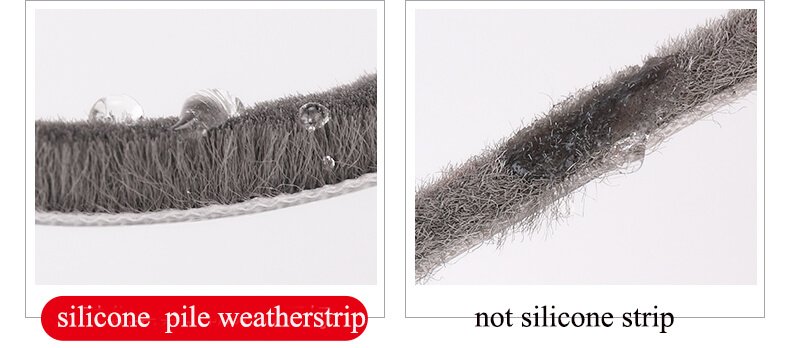
| Polypropylene (PP) | Excellent balance of durability, flexibility, weather resistance, and cost | Most residential and commercial window systems |
| Polyethylene (PE) | Softer fibers with lower operating friction | Sliding windows and doors requiring smoother operation |
| Nylon | Superior abrasion resistance and mechanical strength | Heavy-duty commercial and industrial applications |
Engineering Note
Fiber material influences durability and operating characteristics, but it is only one element of the overall weatherstrip design. Long-term sealing performance depends on the complete engineering specification rather than fiber selection alone.
Although the industry continues to use the term “wool pile,” modern weatherstrips are almost never manufactured from natural wool. Instead, today’s products are produced using engineered synthetic fibers developed specifically for demanding architectural applications.
The three most common materials are polypropylene (PP), polyethylene (PE), and nylon. Each offers different mechanical properties, allowing engineers to select the most suitable material for specific operating conditions.
Polypropylene has become the industry’s most widely used fiber because it provides an excellent balance between durability, dimensional stability, weather resistance, flexibility, and manufacturing cost. It performs consistently across a wide range of residential and commercial window systems and has become the standard material for many OEM manufacturers.
Polyethylene is generally softer than polypropylene. This increased flexibility helps reduce sliding friction, making polyethylene a practical choice for window and door systems where smooth operation is a priority. However, engineers must always balance reduced friction against the sealing requirements of the application.
Nylon offers the highest mechanical strength of the three materials. Its excellent abrasion resistance makes it suitable for heavy-duty commercial systems that experience frequent operating cycles. In demanding environments, nylon fibers can maintain their performance longer under repeated sliding contact.
Despite these differences, experienced engineers rarely choose a weatherstrip based solely on fiber material. A properly engineered polypropylene weatherstrip may outperform a poorly designed nylon product if its dimensions, pile density, backing accuracy, and manufacturing quality are better matched to the application.
Ultimately, the goal is not to select the “best” material in isolation, but to design a weatherstrip system that achieves the required balance between durability, operating force, sealing effectiveness, and service life.
How Is a Wool Pile Weatherstrip Constructed?

Illustration showing the pile fibers, woven backing, optional center fin, and contact surfaces inside a sliding window profile.
Although a wool pile weatherstrip appears to be a simple brush-like seal, it is actually a carefully engineered assembly consisting of several components working together to achieve reliable long-term sealing performance.
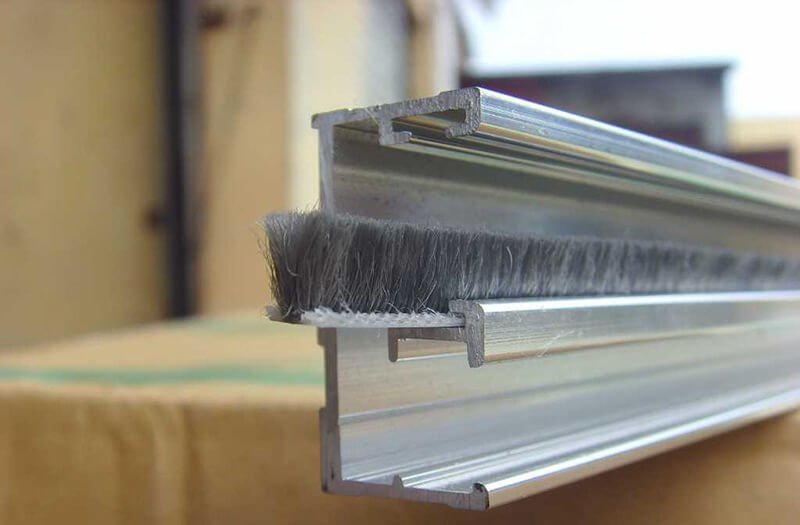
The most visible component is the pile fiber. Thousands of individual fibers are densely woven into a narrow backing to create a flexible sealing surface. As the window or door closes, these fibers compress repeatedly while maintaining continuous contact with the opposing surface. Fiber quality, density, and consistency directly influence sealing effectiveness, durability, and operating characteristics.
Supporting the fibers is the woven backing, which anchors the pile securely while providing dimensional stability during installation and long-term operation. Because the backing fits into a precisely machined groove, backing width is one of the most critical dimensions in any weatherstrip specification. Even small dimensional variations can influence installation quality and long-term retention.
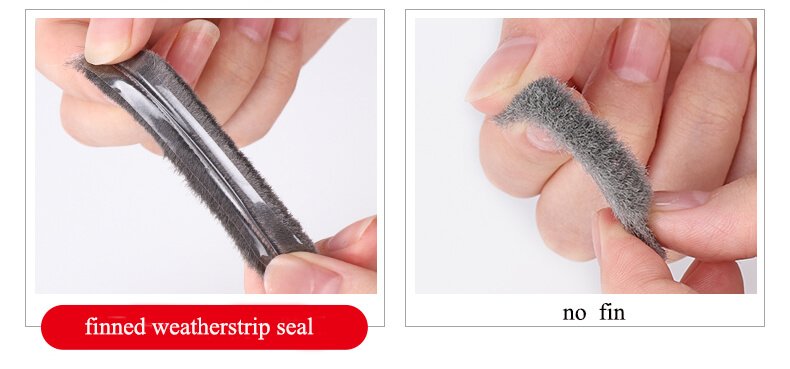
Many modern weatherstrips also include a center fin, typically manufactured from thin polypropylene film. Unlike the surrounding fibers, the fin functions primarily as an air barrier. When the sash closes, the fin interrupts the direct airflow path while the fibers maintain continuous surface contact. This combination generally improves resistance to air infiltration without significantly increasing sliding resistance.
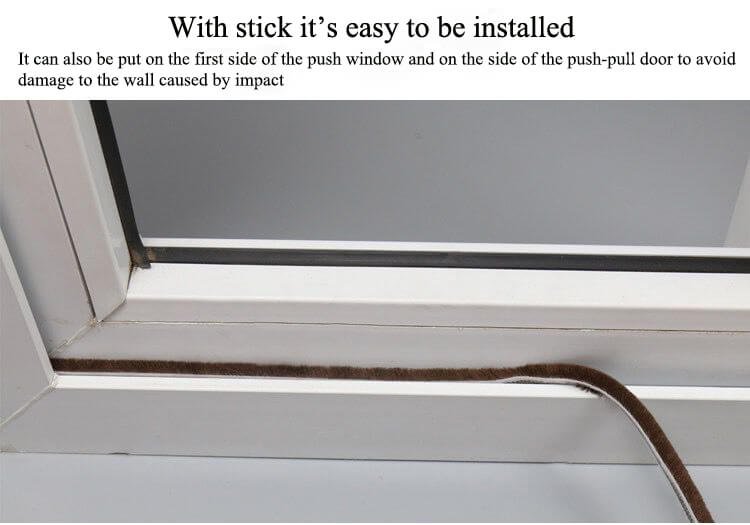
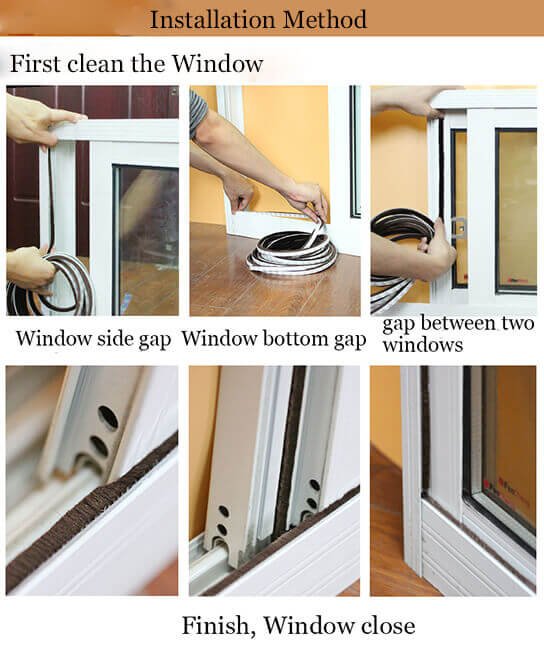
Installation methods vary according to the window or door system. Some weatherstrips are inserted into kerf slots designed specifically for the backing dimensions. Others use adhesive backing or specialized extruded plastic bases developed for particular frame designs. Regardless of the installation method, the engineering objective remains the same: maintain secure positioning while allowing the fibers to function consistently throughout thousands of opening and closing cycles.
Effective sealing is therefore achieved through the combined performance of every component rather than by any single feature alone. Fiber material, backing accuracy, pile density, fin design, and manufacturing precision all contribute to the overall performance of the weatherstrip.
Where Are Wool Pile Weatherstrips Used?

Illustration showing common installation locations in sliding windows, sliding patio doors, aluminum window systems, and uPVC window systems.
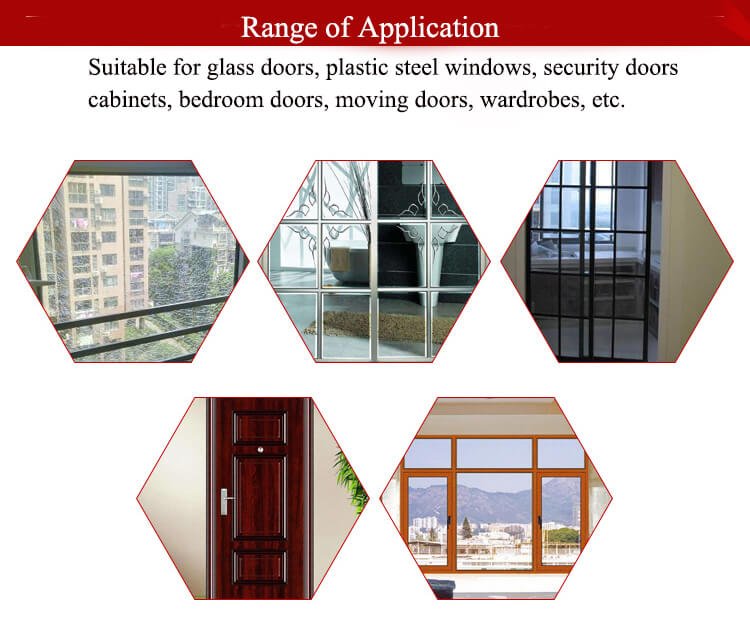
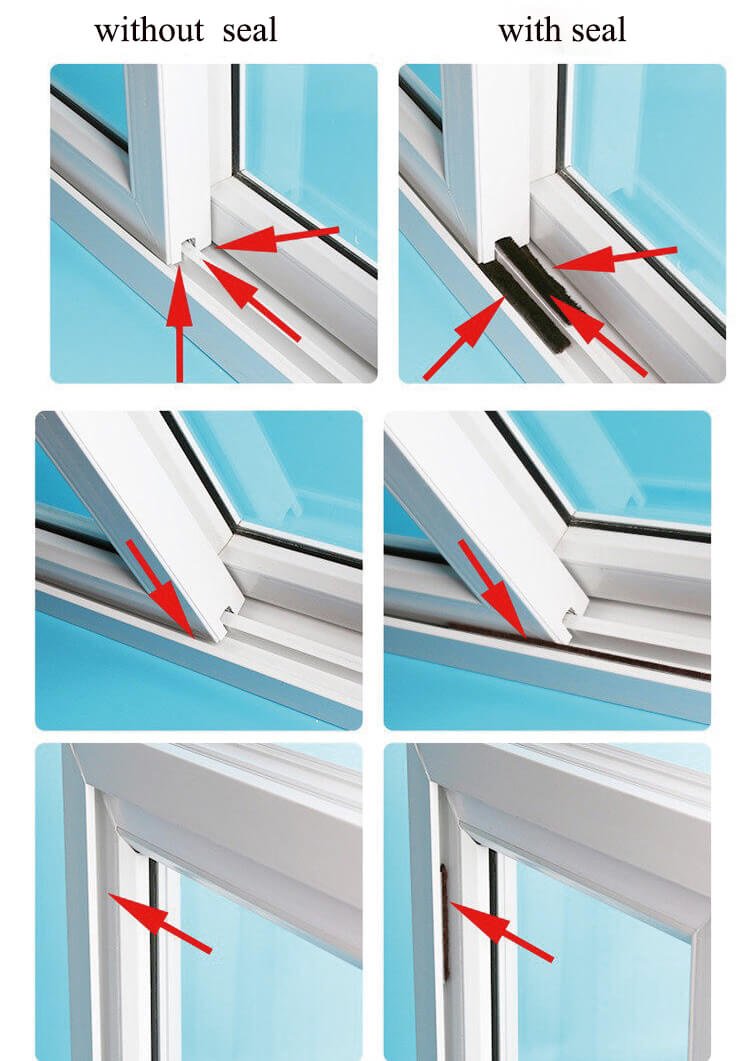
One reason wool pile weatherstrips remain one of the most widely used sealing solutions is their versatility. Their flexible brush construction allows them to accommodate slight dimensional variations while maintaining relatively low operating resistance, making them suitable for a wide variety of moving window and door systems.
Sliding Windows
Sliding window weatherstrips represent one of the most common applications. Installed between the moving sash and the surrounding frame, the pile fibers continuously adapt to small changes in clearance while reducing air leakage, dust infiltration, insects, and outdoor noise. Their flexible construction also helps maintain smooth window operation over years of repeated use.
Sliding Patio Doors
Sliding patio doors typically require weatherstrips capable of balancing reliable sealing with low operating force. Because these doors are generally larger and heavier than standard windows, excessive friction can negatively affect user experience. Selecting the correct pile height and density allows engineers to achieve an effective compromise between energy performance and smooth door movement.
Aluminum Window Systems
Aluminum window systems often incorporate precision-machined grooves designed to accept weatherstrips with specific backing widths. Accurate dimensional control is therefore essential. An oversized backing may complicate installation, while an undersized backing may fail to remain securely positioned during long-term operation. Proper dimensional matching ensures both installation reliability and consistent sealing performance.
uPVC Window and Door Systems
In modern uPVC window systems, wool pile weatherstrips frequently work together with multi-chamber frame designs to improve thermal insulation and weather resistance. Because profile geometries vary among manufacturers, engineers typically specify backing width, pile height, and center fin configuration according to the exact frame design rather than selecting a generic weatherstrip.
Commercial and Industrial Applications
Commercial curtain walls, storefront entrances, industrial equipment, transportation systems, and specialized architectural glazing products also use wool pile weatherstrips where durable, low-friction sealing is required. In these applications, customized dimensions and performance characteristics are often developed to satisfy project-specific engineering requirements.
Summary
Although wool pile weatherstrips are used across many different window and door systems, successful application depends on matching the engineering specifications to the profile design rather than relying on the traditional product name.
Regardless of whether the application involves a residential sliding window or a commercial curtain wall, correct pile height, backing width, fiber density, and installation method will have a far greater influence on long-term sealing performance than the historical term “wool pile.”
How Does a Wool Pile Weatherstrip Work?

Illustration showing pile fibers contacting the moving sash, airflow paths, center fin operation, and sealing pressure.
Engineering Note
Unlike compression rubber seals, a wool pile weatherstrip is designed to reduce air leakage rather than create a completely airtight barrier. Its effectiveness depends on maintaining consistent fiber contact while allowing smooth operation of the window or door.
The sealing mechanism of a wool pile weatherstrip differs fundamentally from that of solid rubber gaskets. Rather than relying on continuous compression of a solid material, a pile weatherstrip creates an effective seal through the combined action of thousands of flexible fibers working together.
When a sliding sash or door panel closes, the pile fibers bend slightly and make contact with the opposing surface. Each individual fiber contributes only a small amount of sealing force, but collectively they create a dense network of contact points that interrupt airflow, reduce dust infiltration, and minimize gaps around the moving panel.
This flexible contact offers several engineering advantages. Because the fibers compress independently, they can adapt to normal manufacturing tolerances, thermal expansion, and slight irregularities in the frame without requiring excessive operating force. As a result, the window or door remains relatively easy to operate while still maintaining effective weather sealing.
Many modern wool pile weatherstrips also incorporate a center fin positioned between two rows of fibers. While the surrounding fibers maintain continuous surface contact, the fin functions as an additional air barrier by disrupting the direct path of moving air through the sealing gap. This combination often provides significantly better air infiltration performance than brush fibers alone, particularly in high-wind environments or locations subject to pressure differences.
Another important advantage of pile weatherstrips is their low operating friction. Since only the tips of the fibers contact the mating surface, sliding windows and doors require less operating force than many alternative sealing systems. This balance between smooth movement and effective sealing is one of the primary reasons pile weatherstrips have become the preferred solution for sliding applications.
During normal service, the fibers gradually conform to the contact surfaces through repeated opening and closing cycles. This natural break-in process often improves sealing consistency without noticeably increasing operating resistance. However, like any mechanical component, weatherstrips eventually experience wear after years of continuous use and should be inspected periodically as part of routine maintenance.
Ultimately, a wool pile weatherstrip performs effectively not because of its historical name, but because its engineered design maintains reliable contact while accommodating the movement and dimensional variations inherent in modern window and door systems.
What Factors Actually Determine Sealing Performance?

| Engineering Factor | Primary Influence |
|---|---|
| Pile Height | Contact pressure and sealing gap |
| Fiber Density | Air leakage resistance and operating force |
| Backing Width | Installation stability and retention |
| Center Fin | Additional resistance to air infiltration |
| Manufacturing Accuracy | Dimensional consistency |
| Installation Quality | Overall sealing effectiveness and service life |
Key Engineering Insight
No single specification determines weatherstrip performance. Successful sealing results from balancing multiple engineering variables to match the specific window or door system.
Many buyers mistakenly assume that fiber material alone determines the quality of a wool pile weatherstrip. In practice, sealing performance depends on a combination of engineering variables that work together as a complete system.
Pile Height
Pile height is one of the most important design parameters. The fibers must be tall enough to maintain continuous contact with the mating surface, but excessive pile height can increase operating resistance, accelerate fiber deformation, and reduce long-term dimensional stability.
Selecting the correct pile height therefore requires understanding the actual clearance between the moving sash and the frame rather than estimating the gap visually.
Fiber Density
Fiber density directly affects the number of contact points available to interrupt airflow.
Higher-density weatherstrips generally improve resistance to air leakage, dust infiltration, and insects because more fibers participate in the sealing process. However, increasing density also increases friction and compression force. Excessive density may make sliding windows and doors more difficult to operate without providing proportional improvements in sealing performance.
For this reason, engineers select density according to the performance requirements of the application rather than assuming that higher density is always better.
Backing Width
The backing secures the weatherstrip within the frame profile. Accurate dimensional matching is essential because an undersized backing may become loose during operation, while an oversized backing can complicate installation or even damage the receiving groove.
Even small dimensional differences can influence installation stability, long-term retention, and overall sealing performance.
Center Fin Design
For products equipped with a center fin, fin thickness, flexibility, and positioning also influence air infiltration performance.
A properly designed fin helps interrupt airflow without significantly increasing operating resistance. However, fin performance should always be evaluated together with pile height and fiber density rather than as an independent feature.
Manufacturing Quality
Dimensional consistency is often overlooked but has a major influence on long-term performance.
Variations in pile height, backing width, fiber density, or fin positioning can produce inconsistent sealing around the window or door perimeter. High manufacturing precision ensures that each section of weatherstrip performs as intended after installation.
Installation Quality
Even the highest-quality weatherstrip cannot perform properly if it is installed incorrectly.
Improper backing engagement, excessive stretching during installation, incorrect orientation, or poor dimensional matching can all reduce sealing effectiveness and shorten service life.
For replacement projects, verifying the original dimensions before selecting an alternative weatherstrip is one of the most effective ways to avoid performance problems.
Ultimately, experienced engineers evaluate the complete sealing system rather than focusing on any single specification. Material, dimensions, manufacturing precision, and installation quality all contribute to the final performance of the weatherstrip.
How Should OEM Buyers Specify a Wool Pile Weatherstrip?

Before requesting quotations or samples, prepare:
☐ Pile Height
☐ Backing Width
☐ Fiber Material
☐ Fiber Density
☐ Center Fin Requirement
☐ Fiber Color
☐ Backing Color
☐ Installation Method
☐ Window or Door System
☐ Engineering Drawing (if available)
☐ Physical Sample (recommended)
Engineering Recommendation
Experienced OEM buyers rarely specify weatherstrips using commercial product names alone. Accurate engineering drawings, dimensional data, and application requirements provide suppliers with the information necessary to recommend the correct product.
One of the most common purchasing mistakes is requesting a product simply as “wool pile weatherstrip.”
Although the terminology is widely recognized, it provides very little engineering information. A supplier cannot determine the correct product without understanding the dimensions, installation method, operating conditions, and performance requirements of the application.
Instead, OEM buyers should prepare a complete engineering specification before requesting quotations or production samples.
At a minimum, the specification should define the required pile height and backing width, since these dimensions determine whether the weatherstrip will fit correctly within the window or door profile. Products that appear nearly identical may perform very differently if these critical dimensions do not match the original design.
Fiber material should also be specified when the application requires particular characteristics such as improved UV resistance, enhanced abrasion resistance, or extended service life under demanding environmental conditions. Likewise, fiber density should be selected according to the desired balance between sealing effectiveness and operating force.
Additional requirements—including center fin configuration, fiber color, backing color, installation method, packaging, and performance targets—should be documented whenever applicable. Providing complete specifications minimizes the risk of receiving products that appear similar but fail to satisfy functional requirements.
For replacement projects, submitting a physical sample together with engineering drawings or measured dimensions allows suppliers to verify compatibility more accurately and recommend suitable alternatives if the original product is no longer available.
Ultimately, successful product selection depends on engineering data rather than terminology. The phrase “wool pile weatherstrip” identifies only a broad product category. Long-term sealing performance depends on selecting specifications that match the exact requirements of the window or door system.
Key Takeaway
For OEM buyers, the commercial name “wool pile weatherstrip” should be regarded only as a starting point for product identification.
Reliable long-term performance is achieved by specifying measurable engineering parameters—including pile height, backing width, fiber density, material selection, center fin configuration, and installation method—rather than relying on historical terminology alone.
Common Misconceptions About Wool Pile Weatherstrips
Although the term “wool pile weatherstrip” has been used throughout the window and door industry for decades, it has also led to several persistent misconceptions. These misunderstandings often influence purchasing decisions, resulting in products being selected based on terminology rather than engineering requirements.
Understanding the facts behind these misconceptions allows engineers, OEM buyers, and distributors to evaluate weatherstrips more objectively and specify products that genuinely meet the performance requirements of their applications.
Is a Wool Pile Weatherstrip Made from Sheep’s Wool?
The simple answer is usually no.
Modern wool pile weatherstrips are almost always manufactured using engineered synthetic fibers such as polypropylene (PP), polyethylene (PE), or nylon. These materials provide significantly better weather resistance, dimensional stability, manufacturing consistency, and long-term durability than natural wool.
The word “wool” remains because it has become an established industry term rather than a literal description of the fiber material.
Today, when engineers refer to a wool pile weatherstrip, they are typically describing a category of brush-style sealing products—not a product made from natural wool.
Is Natural Wool Better Than Synthetic Fibers?
Not necessarily.
Natural wool performs exceptionally well in clothing, insulation, and textile applications because of its excellent thermal properties and moisture management. However, architectural weatherstripping has very different engineering requirements.
Modern window and door systems demand materials that can withstand:
- Continuous sliding movement
- UV exposure
- Rain and humidity
- Temperature fluctuations
- Long-term compression
- High manufacturing consistency
Synthetic engineering fibers are specifically developed to meet these requirements. Compared with natural wool, they generally offer:
- Better moisture resistance
- Improved UV stability
- Higher abrasion resistance
- More consistent fiber dimensions
- Greater manufacturing repeatability
- Longer service life
For these reasons, synthetic fibers have become the industry standard for modern architectural weatherstripping.
Engineering Insight
Modern architectural weatherstripping is designed around long-term engineering performance rather than natural fiber characteristics. Material selection is based on durability, consistency, and application requirements—not tradition.
Does “Wool Pile” Mean Higher Quality?
No.
The term “wool pile” identifies a product category rather than a quality grade.
Two products sold under the same commercial name may perform very differently because of differences in:
- Fiber material
- Pile height
- Fiber density
- Backing width
- Center fin configuration
- Manufacturing precision
- Installation accuracy
For example, two weatherstrips may both be labeled as wool pile weatherstrips, yet one may provide significantly better air infiltration resistance simply because its pile height and backing dimensions are better matched to the window profile.
Quality should therefore be evaluated using measurable engineering specifications rather than product terminology.
Three Common Misconceptions
❌ “Wool pile” means the product contains natural wool.
✔ Modern products are almost always manufactured from engineered synthetic fibers.
❌ “Wool pile” automatically means premium quality.
✔ Product performance depends on engineering design and manufacturing quality.
❌ Fiber material alone determines sealing performance.
✔ Long-term performance results from the combined design of the entire weatherstrip system.
Frequently Asked Questions
The following questions are among the most common inquiries received from OEM buyers, distributors, window manufacturers, and product engineers.
Is wool pile weatherstrip really made from wool?
In most modern applications, no.
Today’s products are typically manufactured using polypropylene, polyethylene, or nylon fibers while retaining the traditional industry name.
Why does the industry still call it wool pile?
The terminology originated decades ago when early brush-style weatherstrips used natural fibers or resembled wool in appearance.
Although the materials have changed dramatically, the familiar industry terminology has remained in engineering drawings, catalogs, and purchasing documents.
What materials are most commonly used today?
Polypropylene is currently one of the most widely used materials because it provides an excellent balance of durability, flexibility, weather resistance, and manufacturing efficiency.
Polyethylene and nylon are also widely used depending on the operating requirements of the application.
Can wool pile weatherstrips be customized?
Yes.
OEM manufacturers commonly customize:
- Pile height
- Backing width
- Fiber density
- Fiber material
- Center fin configuration
- Fiber color
- Backing color
- Packaging
- Roll length
- Installation method
Custom engineering specifications allow the weatherstrip to match the exact requirements of a particular window or door system.
How do I choose the correct wool pile weatherstrip?
Begin with engineering specifications rather than the commercial product name.
The most important parameters include:
- Pile height
- Backing width
- Fiber density
- Fiber material
- Center fin configuration
- Installation method
- Window or door profile
Matching these specifications to the original design is far more important than simply requesting a “wool pile weatherstrip.”
Are wool pile weatherstrips suitable for exterior applications?
Yes.
When manufactured from appropriate weather-resistant materials and correctly specified for the application, wool pile weatherstrips provide reliable long-term performance in residential, commercial, and industrial exterior window and door systems.
Conclusion
The name “wool pile weatherstrip” reflects the history of the window and door industry rather than the material composition of modern products.
Although natural wool inspired the terminology decades ago, today’s weatherstrips are overwhelmingly manufactured from advanced synthetic fibers engineered to deliver consistent sealing performance, smooth operation, and long service life.
Understanding this historical terminology is valuable, but it should never become the basis for engineering decisions.
For OEM buyers, product engineers, and manufacturers, successful weatherstrip selection depends on evaluating measurable engineering specifications—including pile height, backing width, fiber density, center fin design, manufacturing accuracy, and installation compatibility.
These factors ultimately determine whether a weatherstrip will perform reliably throughout its service life.
As materials, manufacturing technologies, and window systems continue to evolve, the traditional name “wool pile” will likely remain part of the industry’s vocabulary.
However, the engineering behind the product continues to improve.
Recognizing the difference between historical terminology and engineering specification enables buyers to make more informed decisions, reduce specification errors, and achieve better long-term sealing performance.
The term “wool pile weatherstrip” describes an industry tradition—not a material specification.
For engineers and OEM buyers, successful product selection should always be based on measurable engineering parameters rather than historical terminology.
When specifying a weatherstrip, remember to verify:
- ✓ Pile Height
- ✓ Backing Width
- ✓ Fiber Material
- ✓ Fiber Density
- ✓ Center Fin Configuration
- ✓ Installation Method
- ✓ Window or Door Profile
These specifications—not the word “wool”—determine how effectively a weatherstrip will perform over years of service.